Here are the five most common ones.
Mistake 1: Choosing the activity before defining the need
It’s the initial mistake.
And it compromises everything else.
You start looking for "something original."
A trendy activity.
A concept another company tried.
A recommendation heard through a network.
And the activity is chosen before even answering the essential question:
What does our team actually need right now?
An activity chosen for the wrong reason has little impact.
Even if it is well executed.
The process should always start with a diagnosis.
Identify the real issues.
Understand what is hindering collaboration, engagement, or performance.
It is this diagnosis that guides the choice of activity.
Not the other way around.
Mistake 2: Treating the activity as an isolated event
A team-building event planned without any follow-through is just an event.
A nice moment.
A break.
But not a catalyst for change.
For an activity to have a lasting impact, it must be part of a broader process.
This means:
- it builds on what was observed beforehand
- it is linked to concrete team goals
- it is followed by a debrief on key takeaways
An isolated activity creates a spike in energy.
A structured process creates a transformation.
The difference between the two is continuity.
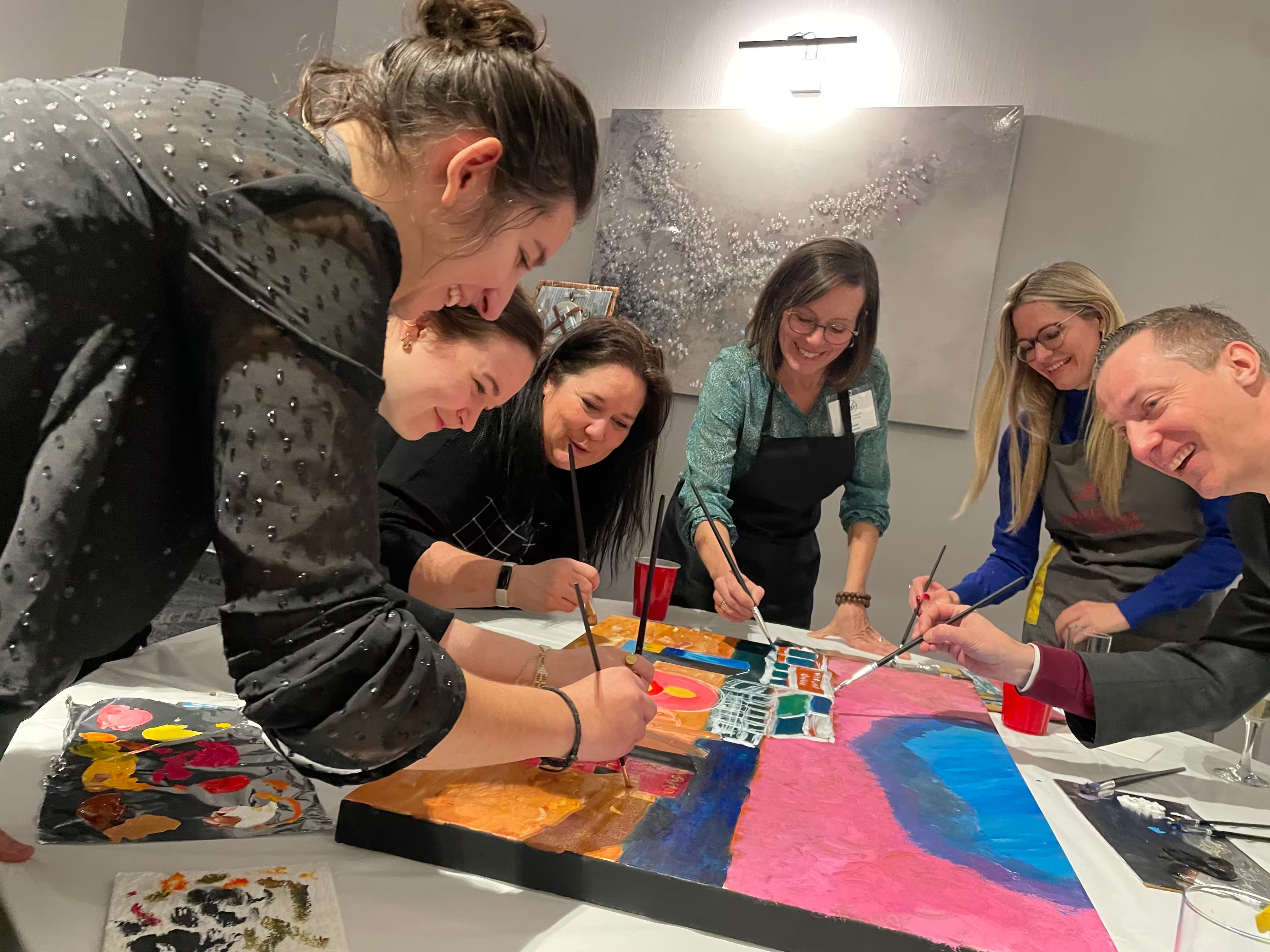
Mistake 3: Neglecting the role of managers
A manager who attends a team activity as a spectator sends a clear message.
This isn't for me.
This isn't that important.
And the team notices.
Managers play a central role in the success of an activity.
Not just during, but especially before and after.
Before:
- explain why the process is important
- create a sense of psychological safety
- demonstrate their own openness
After:
- follow up on commitments made
- keep the conversations going
- reinforce new behaviors on a daily basis
Without active involvement from managers, learning stays in the training room.
It doesn't make it back to the office.
Mistake 4: Skipping the debrief, or rushing through it
This is the costliest mistake.
The activity takes two hours.
The debrief, fifteen minutes.
Often standing up.
Often rushed.
Often superficial.
"Was it good?"
"Yes."
"Perfect. See you next week."
This type of wrap-up leaves the experience meaningless.
Team activities generate valuable insights:
observed behaviors, revealed dynamics, emerging tensions, or strengths that have come to light.
All of this material is lost without a structured debrief.
An effective debrief takes time.
It follows a clear progression: facts, interpretations, connections to daily work, and commitments.
This space for reflection is what turns an experience into learning.
And learning into behavioral change.
Mistake 5: Confusing enjoyment with impact
Enjoyment is necessary.
It is not sufficient.
An activity that is well-received may not generate any learning at all.
And a challenging activity can create a profound realization.
The trap is measuring the success of an activity solely by the level of immediate satisfaction.
Did the participants enjoy it? Success.
Did the participants not enjoy it? Failure.
It is not that simple.
The true indicator of success is what changes in how the team works together in the weeks that follow.
Is communication more direct?
Are decisions being made more efficiently?
Are tensions being addressed rather than avoided?
These changes are not measured by immediate satisfaction.
They are measured over time.
What these mistakes have in common
They do not stem from a lack of good intentions.
They stem from a lack of structure.
Choosing an activity without a diagnosis.
Organizing it without continuity.
Experiencing it without leadership involvement.
Closing it without a debrief.
Measuring it with the wrong metrics.
Each mistake, taken in isolation, seems harmless.
Together, they turn a good intention into a poor investment.
A structured approach to avoid these pitfalls
Avoiding these mistakes does not require a larger budget.
It requires a better approach.
A structured approach begins with a diagnosis.
It integrates managers as participants, not spectators.
It includes a rigorous debrief.
It is built on continuity.
And it measures the right indicators.
It is this approach that turns an activity into a true performance driver.
Take action
If you are planning an upcoming team activity and want to avoid these common mistakes, some upfront planning can make all the difference.
The approaches we offer are designed to maximize the impact of every intervention, from the initial diagnosis to post-activity follow-up.
Get in touch to structure an approach tailored to your reality.